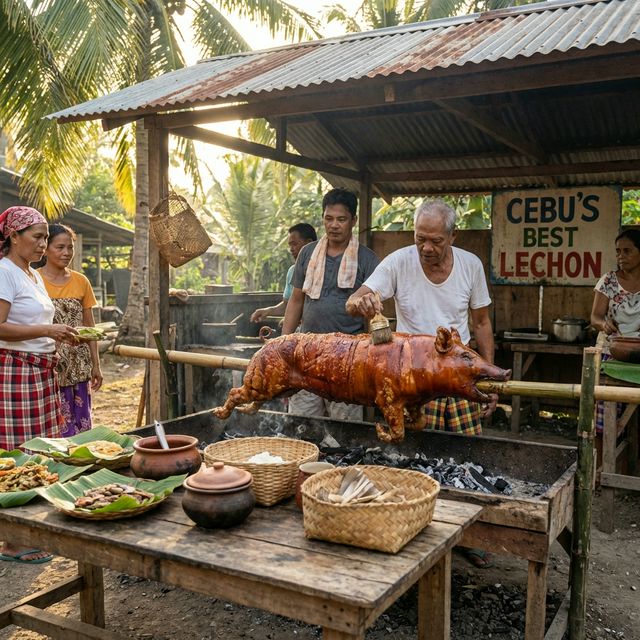
The smell hits you long before the market gates appear. It is a thick, primordial scent—charcoal smoke, rendered fat, and a secret constellation of lemongrass and peppercorns. This is Carcar. To some, it is a transit point between the city and the beaches of the south. To those who understand the soul of Cebuano cuisine, it is a holy site.
The Skin and the Salt
While Manila style lechon relies on a thick liver-based sauce, the Cebuano variant is self-sufficient. In the stalls of the Carcar Public Market, the pigs are stuffed with locally grown aromatics that steam the meat from the inside out while the skin reaches a crystalline, glass-like shatter.
"In Carcar, we don't cook for the tourists. We cook for the salt of the earth. If the pig isn't perfect, the city doesn't eat."
The true ritual isn't found in the pristine air-conditioned restaurants of IT Park. It is found here, sitting on a wooden stool, peeling apart layers of tender pork with your hands, accompanied by nothing more than a few pieces of puso (hanging rice) and the cacophony of a morning market in full swing.